The First Amendment of the U.S. Constitution says: “Congress shall make no law … abridging the freedom of speech, or of the press.” Having independent journalists reporting facts and holding people and institutions accountable is a hallmark of our democracy. That’s why next week, we’re celebrating National News Literacy Week.
What is National News Literacy Week?
National News Literacy Week is organized by our friends at the News Literacy Project, The E.W. Scripps Company (that’s right, the folks who do the National Spelling Bee!), USA Today, and the USA Today Network. It’s a week for teachers, families, and other caring adults to help kids and teens learn how to navigate today’s news and media environment. (And let’s be honest, a lot of adults need to learn these skills too!)
This year’s News Literacy Week is focusing on staying grounded with facts and on rebuilding trust in credible news sources. This is important as we all navigate media ecosystems where algorithms determine what we see, and where artificial intelligence (AI) is flooding the zone with fake photos and videos that are looking more and more real every day.
In a recent survey, the News Literacy Project found that U.S. teens are increasingly distrusting of the information they consume. Their suspicion may come in handy, given that separate research found that 15 out of 20 videos on Instagram Reels are AI slop! (“Slop” is a term used for low-quality content that is usually generated just to feed social media algorithms, keep people scrolling, and generate advertising income.)
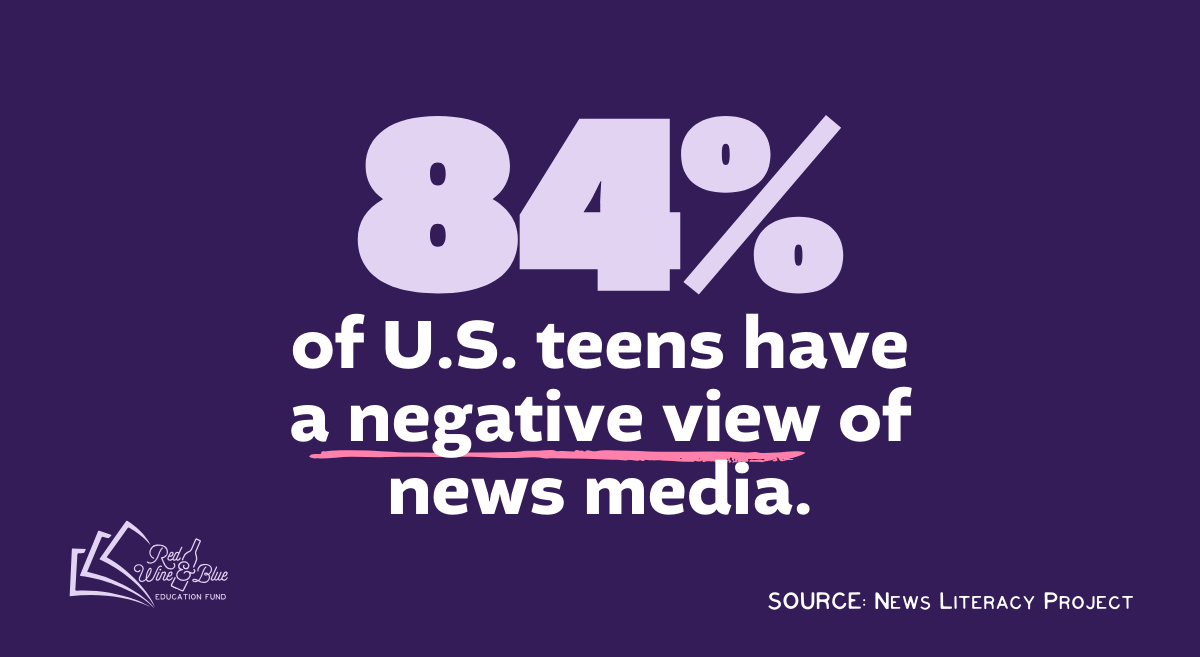
No wonder that the News Literacy Project also found that 84% of U.S. teens have negative views of the news media and journalists. This isn’t surprising since we live in a time when politicians frequently label anything they don’t like as “fake news” or “alternative facts,” but if a healthy democracy needs a free and functioning press, it also needs its people to trust them!
What is news literacy?
News literacy is:
- Understanding why the freedom of press is an important part of our Constitution.
- Learning the values of professional, ethical, and credible journalism: commitment to accuracy, fairness, independence, and accountability.
- Recognizing our own biases as well as biases we see in reporting.
- Putting all these skills together in order to assess news sources for accuracy and reliability.
- Using the trustworthy sources we identify to inform our civic decisions like voting.
The News Literacy Project provides resources for teachers to use in classrooms and for parents, grandparents, aunts and uncles, and other mentors to use at home and at work – or to just learn for ourselves!
In our rapidly changing information environment, we need to be able to separate fact from fiction and truth from lies. Now that we can all freely share news and information with each other, bad information can go viral quickly, causing lasting damage.
Our kids and teens are smart to have a healthy level of skepticism, but let’s make sure they also know which news sources to trust so that our free press can continue to provide truth and accountability to serve us all for the greater good.
News Literacy Week kicks off on Monday, February 2. In next Thursday’s Easy A, we’ll learn how to assess news sources for credibility.