
The majority — 63% — of abortions in the U.S. are performed using medication, not surgery.
The FDA-approved drug mifepristone is one of the main pills used in medication abortions. Its safety has been proven for decades through more than 100 studies. It’s safer than Tylenol, Penicillin, and Viagra!
But Health and Human Services Secretary Robert F. Kennedy, Jr. just announced that the FDA will take on a new safety review of mifepristone.
Why? Because a partisan group affiliated with Project 2025 just produced a biased, non-scientific report that questions mifepristone’s safety. Project 2025 wants the FDA to reverse its approval of mifepristone and ban medication abortion nationwide. This is their first step towards making that happen.
But here’s the thing — this is not what most Americans want!
81% of Americans believe that the decision to get an abortion should be between a woman and her doctor, not the government. And support for legal abortion has increased even more since the U.S. Supreme Court issued their 2022 decision in Dobbs v. Jackson Women’s Health Organization, taking away our reproductive rights.
The media covered the immediate fallout of Dobbs, as 21 states swiftly banned abortion, but we haven’t heard much more about the state of reproductive healthcare lately. Unfortunately, as this RFK, Jr. announcement shows, we are all facing a new wave of threats to our reproductive rights.
These threats aren’t just at the federal level. Anti-abortion extremists are also trying to pass misleading state and local bills that are going underreported. Here are some examples:
- “Clean water” surveillance bills that would require the monitoring of wastewater for evidence of birth control, abortion medication, and hormone therapies. They claim it’s to ensure the safety of drinking water, but really they just want to detect where people are using these forms of healthcare.
- “Child protection” and “trafficking” bills that penalize anyone who helps young people get abortion care. In states with abortion bans, these laws call it illegal trafficking if you help a young patient get abortion care in another state. These bills are meant to chill community support, keeping us too scared to help the young people in our lives.
- “Baby Olivia” bills that require public schools to include an anti-abortion video called “Meet Baby Olivia” (or similar content) in their science or sex education classes. According to doctors and scientists, the video has biased and unscientific information.
- Bills that require collecting medical data on abortion procedures and providers and making that data public. This would enable anti-abortion extremists to identify doctors and sue them — or worse.
- “Equal protection” or “fetal personhood” bills that criminalize having an abortion or discarding IVF embryos. This means patients or doctors could be charged with homicide.
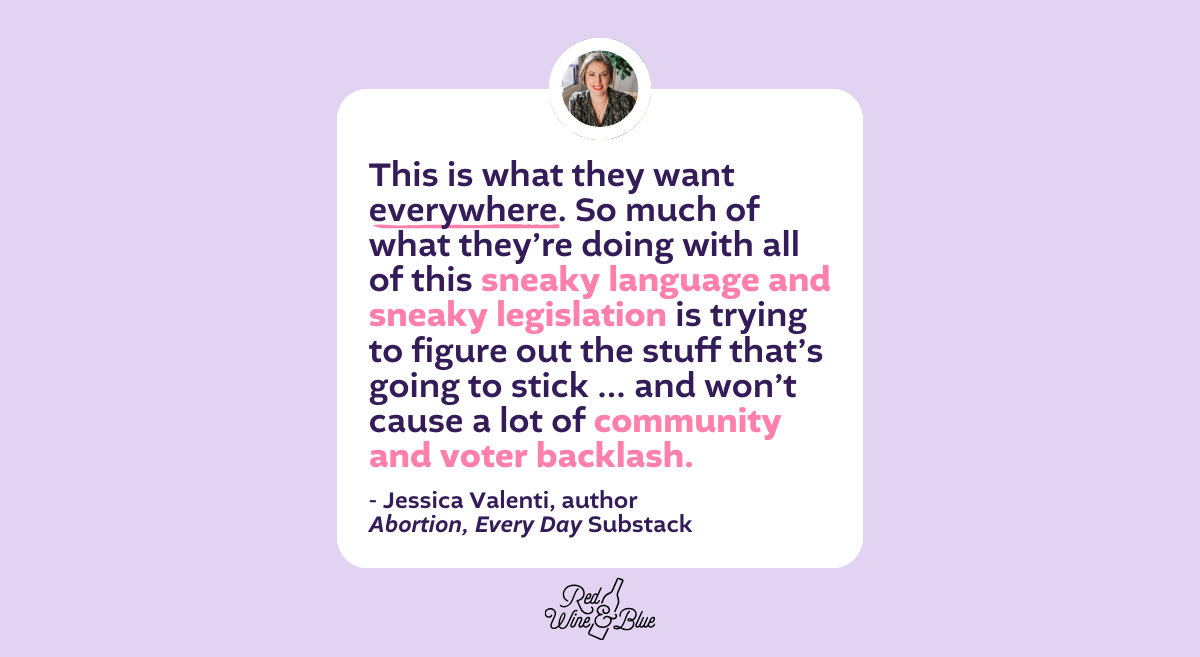
Extremists are testing these sneaky bills at state and local levels to see what will go unnoticed and get passed into law. If they can get them passed in one state, they’ll try in many more.
So what do we do in the face of these new threats to our reproductive freedom? We don’t let their tricks go unnoticed! We stay informed so we can spot these types of bills if and when they come to our lawmakers. Then we can work to stop them.
We can also make sure that the people in our community know that we are trusted sources of information and support. We won’t let these threats stop us from helping our community. We’ll share more specific actions we can take to protect our reproductive rights in the weeks ahead.