We’ve been fighting the explosion of book bans since Red Wine & Blue started. PEN America reports 16,000 book bans in public schools since 2021 — a level not seen since the 1950s during McCarthyism. This increase has been driven by organized groups with a political agenda — and lately even by the White House. They want to remove books because they don’t like the truth the stories tell, the characters they feature, or the personal identities of their authors.
But the American Library Association shows a slowing of reported book bans in the last year, so is it time to celebrate? It’s actually a little more complicated than that. This decline might be due to successful legal challenges to book bans, which is good news. But it’s also likely due to an increase in soft censorship.
What is Soft Censorship?
Soft, or quiet, censorship can come in many forms, but in general it’s defined as removing a work without officially banning it. Here are some examples:
- An organized group coordinates to check out all the books they don’t like for as long as possible so that they are never available for the people who actually want to read them. (Yes, people are actually doing this!)
- Books are quietly removed from shelves during a routine process called “weeding” which is normally used to remove books that are damaged, outdated, or no longer in demand.
- Books are purposefully not ordered or added to a collection because they are known to have been challenged elsewhere.
- Books are moved to age-restricted areas of the library or removed from public displays, even if they are written for younger audiences.
- Entire shelves or libraries are closed off while large reviews take place for extended or indefinite amounts of time.
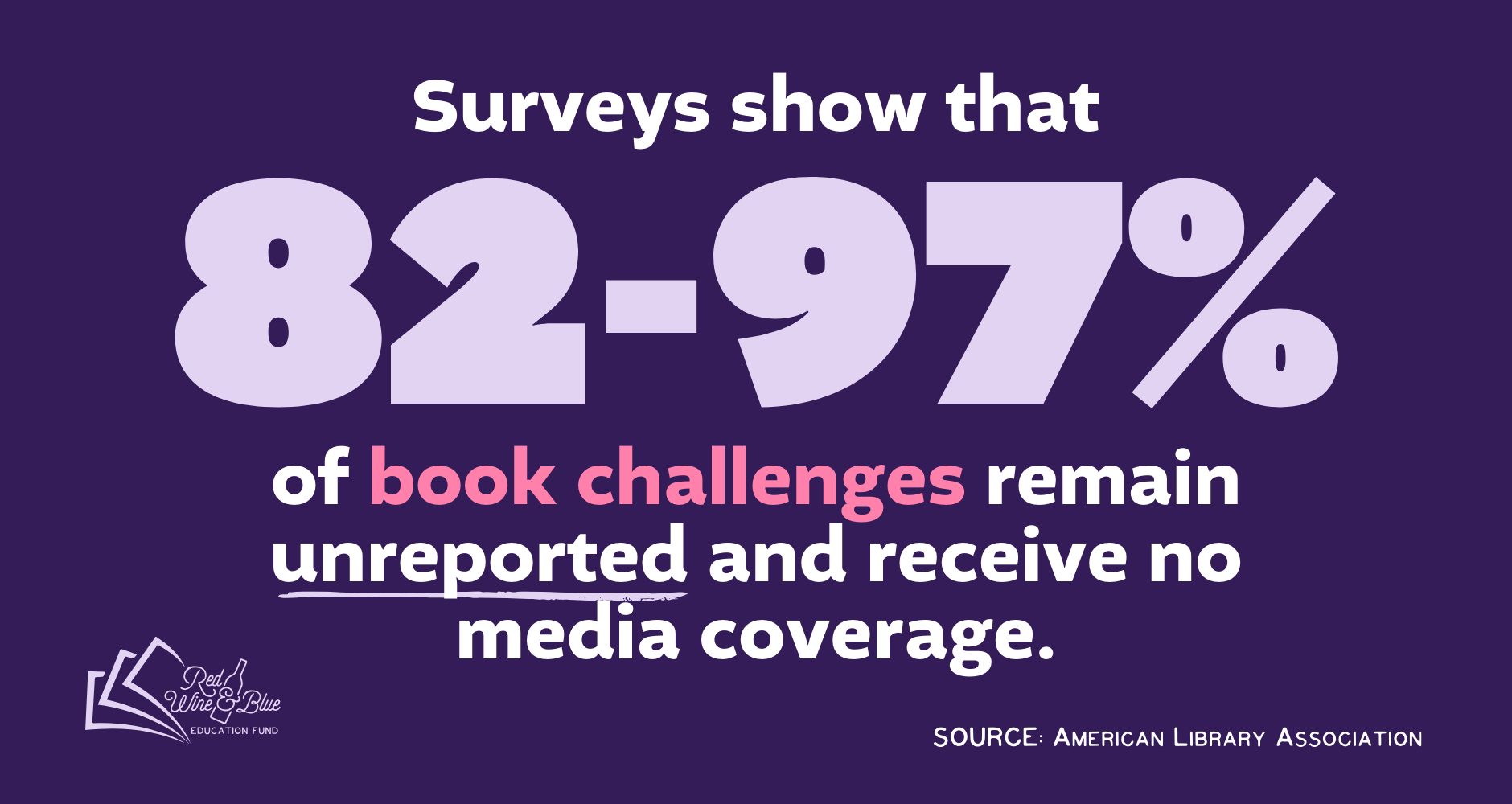
- Book bans and challenges simply go underreported to the organizations that are tracking them, either because librarians and teachers have been silenced by fear or have left their jobs altogether in the face of unprecedented public scrutiny and attacks, or because the local news outlets that cover this issue are dwindling.
Censorship is wrong, whether it’s loud or quiet. It’s a violation of our freedom to read, speak, think critically, and be given equal legal protection. It’s also bad for our kids and our communities. Censoring or banning books keeps us from understanding ourselves and the world around us and it takes teachable moments away from our families.
Not to mention the fact that it’s expensive! Just like we found in the Costs of Conflict report, some school districts have spent up to $135,000 a year fighting book bans and soft censorship.
Successfully Fighting Book Bans
There actually is some good news in all of this. Recent surveys show that up to three quarters of Americans oppose book bans and trust librarians and teachers to provide appropriate reading materials. And standing up to book banning extremists works. We’re seeing people fight back in places like Idaho, South Carolina, and Tennessee. At least 12 states have already passed laws to protect the right to read and give legal protections to librarians.
So what can you do about it where you live? You can start by paying attention to what’s happening in your local public schools and libraries. Attend school board and library board meetings. Read district and school newsletters and other communications. Have a library card and participate in library and school programs. Get to know your local teachers, librarians, and their collections. Let them know that you have their back!
You can also pay attention to your state legislature. The organization Every Library tracks bills that threaten our right to read as well as bills that support libraries, so you can see what is happening in your state. If bills are being considered, visit your state legislature’s website to see if you can sign up for bill tracking alerts.
All of this will help you to be ready to speak up and fight back if any form of banning shows up in your community. We’ll cover more easy actions you can take to fight soft censorship in the coming weeks.