In our divisive political climate, there’s one thing that most suburban women can agree on regardless of party affiliation – we all want to keep ourselves and our families healthy!
But every day, that feels harder and harder to do.
Fresh, healthy food is way more expensive than unhealthy, processed alternatives. Some of us don’t even have grocery stores with healthy, affordable options nearby. And there is confusing information out there about what’s safe to eat and drink, especially if you scroll on social media.
Healthcare costs are skyrocketing, too, while 28 million Americans don’t have health insurance.
Funding for Medicare and Medicaid is under threat, leading to the closure of community hospitals, especially in rural areas, making it harder for people to access doctors for anything from basic checkups to emergency healthcare.
Dangerous misinformation has kept pregnant people from using basic pain medication, and kept new mothers from protecting their children with safe and effective vitamin shots and vaccines. Women are suffering and kids are more susceptible to entirely preventable diseases like measles and Vitamin K deficiency.
As we get older, peri/menopause symptoms are sneaking up on us, and our doctors aren’t helping us understand them. We’re also more interested in preventing and treating diseases, but funding for women’s healthcare research has been cut.
Meanwhile, politicians are signing executive orders to ramp up the production of glyphosate, a cancer-causing pesticide. They’re loosening regulations that keep our air clean and water safe to drink. And they’re fast tracking data centers that are connected to air pollution and childhood asthma.
These same politicians campaigned on promises to make America healthy, but instead, they’re giving giant corporations tax breaks to put their profits over our wellbeing.
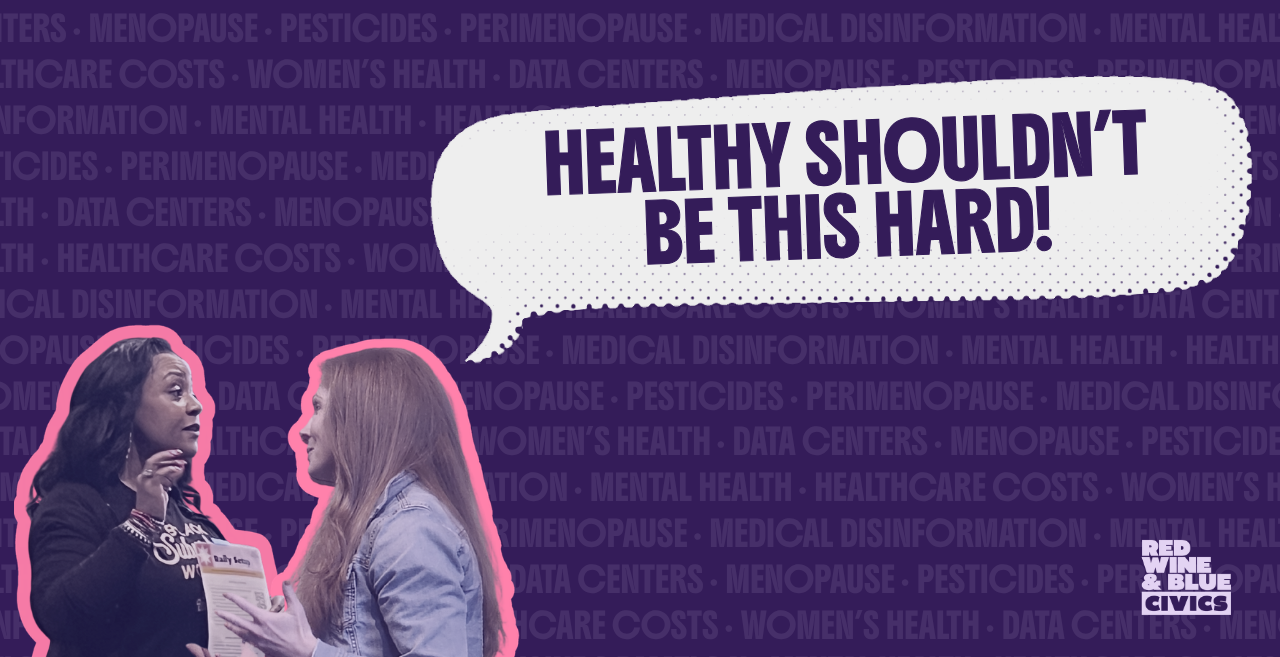
Being healthy shouldn’t be this hard.
We can all agree that we want:
- Safe and healthy communities to live in and raise our kids.
- Access to affordable, nutritious food – and to know where it comes from.
- The removal of pesticides and other toxins from our food, air, and water.
- Real science on the vaccines and medicine that keep us and our kids safe.
- Funding for women’s and children’s health research.
- Accessible and affordable healthcare for all.
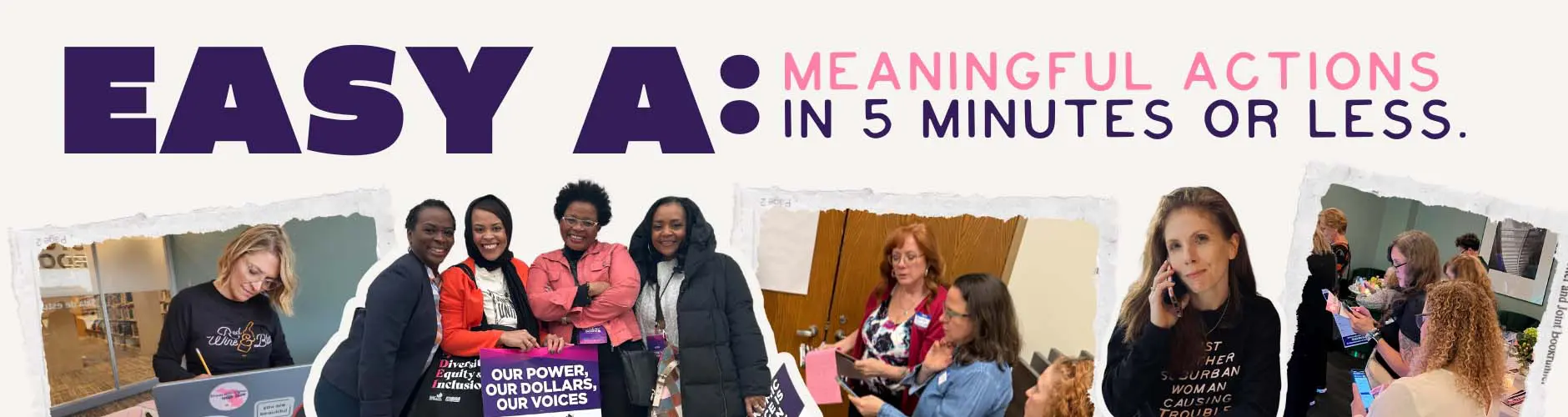
We’re organizing women to advocate for these issues. Over the next few weeks, we’ll take easy actions together to make it easier and more affordable to be healthy in America.