
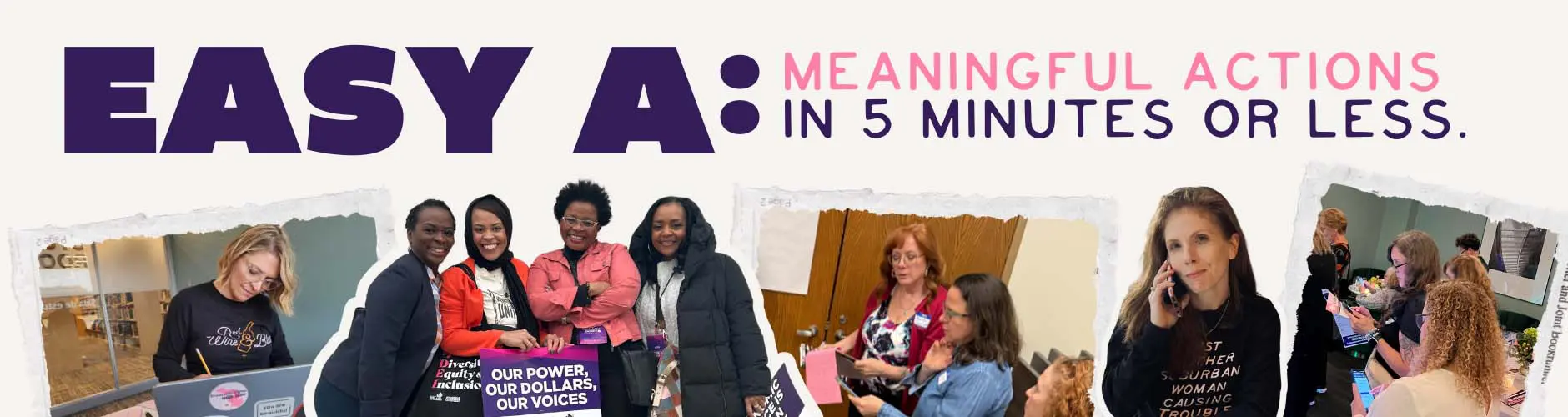
Hi there! Welcome to Easy A–Your go-to source for quick and easy actions you can take in five minutes or less about the issues you care about.
Are you a busy mom? Or maybe your work is so hectic you can’t think about anything else during the day? A lot of us are also taking care of parents or other loved ones too, leaving little time for anything else.
The good news is that these are things you can do while you’re waiting in the school pick up line, on your lunch break, or even at your kid’s soccer practice – anywhere you happen to be! And you can easily share Easy A with your friends so they can be in the know, too! We’ll send you a new action to take every week–just one, we promise –and it will always be something you can do in five minutes or less. Ready to get started? Let’s go!
Do This: Participate in Banned Books Week
Unite Against Book Bans, an initiative of the American Library Association (ALA), hosts Banned Books Week every year. This year’s Banned Books Week starts in just a few days and runs from October 4 to 10.
More than 4,200 books were challenged in 2025, and we need to stand up for the right to read. There are a lot of things we can do to fight book bans. Every action we take, no matter how big or small, makes a difference. One of the easiest things we can do is share information!
We need to drown out the noise from the book banners and spread the truth. The ALA has a lot of information and resources on banned and challenged books, and we’re making it super easy for you to share it with your networks.
Take part in Banned Books Week and earn your Easy A by sharing the post below using your favorite social media and messaging apps.
And if you have time to do more, now or in the future, here are some more suggestions for taking action against book bans from Betsy Gomez of the ALA:
- Report censorship to the ALA if and when you see it. Anyone can submit reports to their database.
- Have conversations with friends and family about what’s going on with book bans in our schools and public libraries. The ALA has tips for how to effectively have these conversations.
- Don’t forget to talk with your local librarians, too! Ask them what they need and how you can support them.
- Tell decision makers that you support the freedom to read. Whether it’s school boards, library boards, state legislators, or elected representatives at the national level — if book bans or laws relating to censorship are on the table, make your voice heard through public comments, phone calls, messages, and petitions.
- Volunteer at your local library. Join local boards, book review committees, or a local “Friends of the Library” group.
- Join Red Wine & Blue’s Book Ban Busters.
- Watch our full event with Betsy here to learn more.
Together, we can unite against book bans and protect our freedom to read.
Do This: Share What You’ve Learned About Local Government
Now that we’ve spent a few weeks learning about how local government works, let’s not keep this information to ourselves!
We’ve created a shareable pdf that explains how local government shapes our daily lives, and even better – how we can get involved to make our communities safer, more welcoming, and enjoyable!
We’ve also made it really easy for you to share this information with friends and family. You can use the post below to share using your favorite messaging apps on your phone.
And if you’ve got time to do a little more this week, join us TONIGHT for our next virtual Civics Salon: How Local Government Works. You can sign up at this link. If you can’t make it but still want to learn more, RSVP and we’ll send you the recording and give you a way to invite your friends!
Watch This: 9 Ways Local Government Impacts Us Every Day
You wake up every morning and immediately wash your face and brush your teeth with clean water running from the bathroom tap. Then you head out, driving your car or riding the city bus, on (hopefully) well-maintained roads, to get to work or drop the kids off at your neighborhood school. Or maybe you walk the dog or take a jog through your nearby park. Somewhere in the distance, you hear the sirens of emergency first responders rushing to help someone in need.
In the evening, you squeeze in a trip to your neighborhood rec center for a quick game of pickleball with friends or a free support group meeting. Before climbing back into bed with that library book you can’t wait to get lost in, you take your trash and recycling bins out to the curb for pickup first thing tomorrow morning.
Guess what? Your day was brought to you by the local government!
Earn your Easy A this week by watching our short video, 9 Everyday Services Your Local Government Runs (That You Probably Didn’t Realize):
Whether we’re happy with what our government provides in our community or think it needs improvement, we can make a real impact by getting involved, so let’s get local!
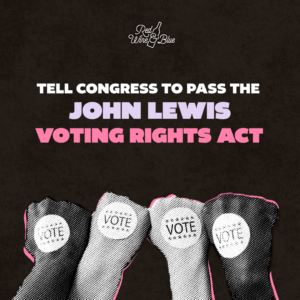
Do This: Tell Congress to pass the John R. Lewis Voting Rights Advancement Act
Last month, we completed our Easy A series on gerrymandering, but we’re returning to the topic one more time with breaking news!
On April 29, the U.S. Supreme Court issued their decision in Louisiana v. Callais, a racial gerrymandering case we previously told you about. They ruled exactly as we feared: gutting Section 2 of the Voting Rights Act, clearing the way for racial (and racist) gerrymandering. It’s the biggest blow to our voting rights since the act was passed in 1965.
Janai Nelson, President and Director-Counsel of the NAACP Legal Defense Fund who argued this case before the Court, warned us that this ruling will change the future of redistricting for all voters, dilute the power of Black and brown voters, and drastically reduce the number of representatives of color in Congress.
It’s a huge blow, but we can still fight for a true, multiracial democracy, starting with demanding that Congress pass the John R. Lewis Voting Rights Advancement Act. This act would restore the hard-won voting rights gained during the Civil Rights era and protect them for everyone.
Read This: How Local Government Shapes our Daily Lives
When we talk about politics, we might immediately think about the President or Congress. They certainly give us a lot to talk about! But many of the decisions that impact our daily lives, like roads, schools, and public safety, are actually made at the local level. So let’s take a look at how local government works.
How is local government structured?
Local governments are organized around a population center. Within them, elected representatives govern, and agencies provide resources and services.
There are two layers of local government: counties (some places call them boroughs or parishes) and municipalities (cities, towns, townships, villages, or boroughs, depending on where you live). These are defined and given power by each state’s constitution. They can also be further divided into different school or fire districts.
What does local government do?
Local governments – both counties and municipalities – have many important functions that impact our day-to-day activities and safety:
- Parks & Recreation provides green spaces and trails, playgrounds, sports and recreation facilities and programs, community gardens, public pools, and public art.
- Public schools educate the majority of kids in our communities. Local taxes are just one source of funding for public schools, but a very important one!
- Public libraries lend books and other resources, provide free internet and computer access, offer programs and activities, and host public meeting spaces.
- Police departments, fire departments, and emergency medical services keep our communities safe, protected, and supported during emergencies.
- Municipal courts, jails, and prisons uphold the law and address crime.
- Public Works departments include water, sewer, trash collection, recycling, street and sidewalk maintenance, bike lanes, fire hydrants, parking, and accessibility.
- Public transportation like buses and trams are vital for people without their own vehicles or the ability to drive.
- Zoning and land use offices oversee the development of housing and businesses.
- Social Services provide public housing and public health initiatives like vaccines.
- Advisory boards and committees assist with everything from animal welfare to historic preservation.
Who gets elected in local government?
Many of the leaders in local government are elected. This includes mayors, city and town council members, county commissioners, school board members, and judges.
Mayors represent their city/town and lead their respective council. City/town councils and county commissioners review and approve local budgets and establish local ordinances. School boards set curriculum, decide school policies, and approve and oversee budgets. Judges ensure that local laws are fairly upheld.
How is local government funded?
All of the services provided by our local government have to be paid for by something! That’s where our property taxes come into play. Taxes on our personal property like land, homes, and vehicles help fund all these important services that we use everyday.
Additional funding can come from bonds and millages that are proposed as ballot initiatives and voted on by the public during elections. The process of how these get on ballots varies by state.
Notably, increases to our local taxes don’t always keep up with inflation. This can lead to shortfalls in budgets for our schools, libraries, public safety providers, and other services. People often complain when their tax rates go up, but they also complain if their schools can’t afford maintenance, streets are full of potholes, or salaries for teachers, police officers, and firefighters are too low. Our local elected leaders have to navigate this balance every day.
What role can we play in local government?
Paying our taxes helps fund our counties and municipalities, but we can do even more. We can help shape our communities by staying informed about local issues, attending board meetings, volunteering on local committees, voting in every election, and even running for office ourselves. We all play a part in creating a safe, welcoming, and enjoyable community to live in!
Do This: See your state’s gerrymandering report card
Gerrymandering is when during the routine process of redistricting, politicians create voting districts that favor their own party in elections. Politicians shouldn’t pick their own voters! This is unfair to all voters and often leads to the underrepresentation of minority groups.
Right now, it seems like gerrymandering is everywhere. The Supreme Court is poised to make racial gerrymandering legal. President Trump is encouraging Republican-led states to redistrict in their own favor before November’s elections, and Democrat-led states are fighting back. Both parties have a history of gerrymandering in many states over time.
Do you know how gerrymandered your state is?
The Princeton Gerrymandering Project can tell you! Their nonpartisan, data-driven Redistricting Report Card grades each state’s voting districts on fairness, competitiveness, and other features. Your Easy A this week is to take a few minutes to visit their map and see your state’s score!
Knowledge is power, and the more you know about how voting and elections work in your state, the more powerful your voice – and your vote – can be!
Watch This: How the Supreme Court Could Roll Back Voting Rights
Last week’s Easy A provided an easy explainer on gerrymandering, which is the purposeful drawing of voting districts to unfairly favor a certain group or political party.
We learned that while gerrymandering is not necessarily illegal, Section 2 of the Voting Rights Act of 1965 does make gerrymandering on the basis of race illegal – and we’re at risk of losing that protection!
Right now, the U.S. Supreme Court is deciding Louisiana v. Callais, which will determine if Section 2 of the Voting Rights Act remains constitutional.
Janai Nelson, President and Director-Counsel of the Legal Defense Fund, argued this case before the Court. Take 90 seconds to watch this video and hear what she recently told us about how this ruling could reshape redistricting and fair representation across the country.
Then come back next week to take one more easy action to fight gerrymandering!
Got time to learn more? You can watch our entire event with Janai on our YouTube channel and read about the Fair Fight Action and Black Voters Matter report she referenced here.
Read This: An easy explainer on gerrymandering
If you’ve been following politics lately, you’ve probably heard the term “gerrymandering” and like most people, you may have wondered, what the heck is that?
What is gerrymandering?
Gerrymandering is when the maps for voting districts are purposefully drawn unfairly by politicians in order to benefit a certain political party or group of voters.
The term comes from former Massachusetts Governor Elbridge Gerry who signed a bill in 1812 to redraw the voting districts in his state. One new district was so wonky, its outline resembled a salamander. So, Gerry+mander = gerrymander, and the term was born.
Gerrymandering is the kind of thing that annoys people about politics and makes them want to tune out altogether, but understanding and pushing back against it is the only way to fix it and get politics working fairly for all of us, so let’s learn a little more about it.
What’s the difference between gerrymandering and redistricting?
Gerrymandering happens during the perfectly routine process of redistricting. Every ten years, after we get updated population numbers from the U.S. Census, the number of seats each state gets in the U.S. House of Representatives is recalculated.
This is also a good time for states to redraw their voting districts, and someone has to draw those maps! In most states, that responsibility falls to the state legislature, although in some states it is done by independent groups or commissions.
So, state politicians get the privilege of creating the very districts that will vote for them! Both political parties have been known to take advantage of this power by creating those districts in ways that favor their own candidates.
How does gerrymandering hurt voters?
Most voters agree, gerrymandering isn’t fair. It seems like common sense that politicians shouldn’t get to be the ones deciding who their voters are – it’s supposed to be the other way around!
Gerrymandering is also bad for voter representation. It reduces competitiveness in races because fewer candidates will challenge incumbents if the race seems impossible to win. And when politicians feel secure in their seats, they become less accountable. They know they’ll be re-elected easily regardless of how well they represent their constituents.
Gerrymandering ultimately results in the disproportionate representation of a party in the state compared to its actual population. For example, in heavily gerrymandered North Carolina, the percentages of Republican and Democratic voters are equal, but voting districts are skewed to elect 10-11 out of 14 U.S. House seats for Republicans in the 2026 elections. Similarly, in Ohio, their 2026 maps are expected to elect 12 out of 15 U.S. House seats for Republicans, despite their voting population being more evenly split.
Is gerrymandering legal?
While it’s unfair, there is nothing that makes gerrymandering along partisan lines illegal. In fact, the U.S. Supreme Court has ruled that there is no federal oversight for partisan gerrymandering, although it can be challenged in state courts. The Voting Rights Act of 1965 does, however, make racial gerrymandering illegal.
How does gerrymandering hurt Black and brown communities?
Gerrymandering hurts the party that is not in power when the district maps are drawn, and it also disproportionately impacts Black and brown communities. Gerrymandering has historically been used to reduce minority representation and voting power in a state. This is done by either “cracking” or “packing” districts.
“Cracking” is when district lines are drawn right through communities of color in order to split them up across multiple districts. This gives them less of a chance to elect a representative in any given district. “Packing” is when lines are drawn to place communities of color all in one district, reducing their overall opportunities for representation in the state. Both are illegal, but that doesn’t stop lawmakers from trying.
Why are we talking about gerrymandering so much right now?
We already mentioned examples of gerrymandering in North Carolina and Ohio, states that have seen significant gerrymandering in recent years, but it’s happening nationwide as extremists in state legislatures try to hold onto power.
President Trump recently pressured Texas and Missouri into gerrymandering their congressional districts in favor of Republicans. In response, California passed a redistricting measure that will favor Democrats in 2026, and Virginia is holding a special election this month to do the same. Other measures or court cases are taking place in states like Utah, Missouri, New York, and Maryland.
The U.S. Supreme Court is expected to rule soon on Louisiana v. Callais, an incredibly consequential case that risks overturning some of the protections the Voting Rights Act gives us against racial gerrymandering.
What’s an alternative to gerrymandering?
Once voters understand what gerrymandering is, they agree that it undermines our democracy. We all want our votes to count fairly and equally. Elections should be decided by voters, not by the politicians themselves before we even get to the polls!
One way to combat gerrymandering is to have redistricting done by independent commissions who accurately represent the general population and operate openly and independently. States can also pass laws against gerrymandering, and we can be sure to elect judges who will rule against unfair gerrymandering in our states.
In other words, in order to get rid of this ugly side of politics, we have to get involved locally and change it for the better!
Do This: Tell us, how easy is this for you?
We’re taking a break from our usual Easy A routine this week just to check in with you.
Our weekly Easy A blog is written with our busiest members in mind – those of you who are fired up and want to do something but don’t have a lot of free time. We provide meaningful actions that you can take in five minutes or less each week.
We want to know, is that still working for you?
If so, great! We’ll keep the easy assignments coming. If not, let us know and we’ll find a better way to stay in touch. Just click below to answer and we’ll take care of the rest.
Please start sending me more ways to take action with Red Wine & Blue.
I love these quick, meaningful actions I can take each week. Keep ‘em coming!
I’d prefer to hear about upcoming opportunities with Red Wine & Blue on a monthly basis.
Do This: Find the Women Making History Near You
Red Wine & Blue’s theme song is “We Came To Make A Change” and we aren’t kidding! Our members are making history every day in their communities through changemaking actions, big and small.
From holding a “Save Sesame Street” bake sale supporting a North Carolina PBS station to a local art show fundraiser supporting reproductive rights organizations in California – both raised thousands of dollars!
And from filling food and diaper banks to organizing lobby days at state legislatures –our members are supporting their neighbors’ immediate needs AND demanding their elected representatives address those needs through lasting legislation.
You can be a part of these changemaking efforts, too.
No matter how much (or how little) time you have to spare, local groups in the Red Wine & Blue Network are looking for new members with a full range of time, talents, and skills right now.
Let’s close out Women’s History Month with a commitment to writing the next chapter. Take a few minutes to search our map and join the women making history near you today!
Watch This: Celebrating Women’s History Month
America has been celebrating March as Women’s History Month since 1987, but we know that women have been making history since the very beginning.
Take a few minutes this week to watch our recap of notable moments in the history of women’s rights:
As we celebrate this progress, we also recognize there’s still a lot of work to do! The good news is, women are great organizers and Red Wine & Blue members are leading the way. Come back next week for an easy way to join us in making our own history.