
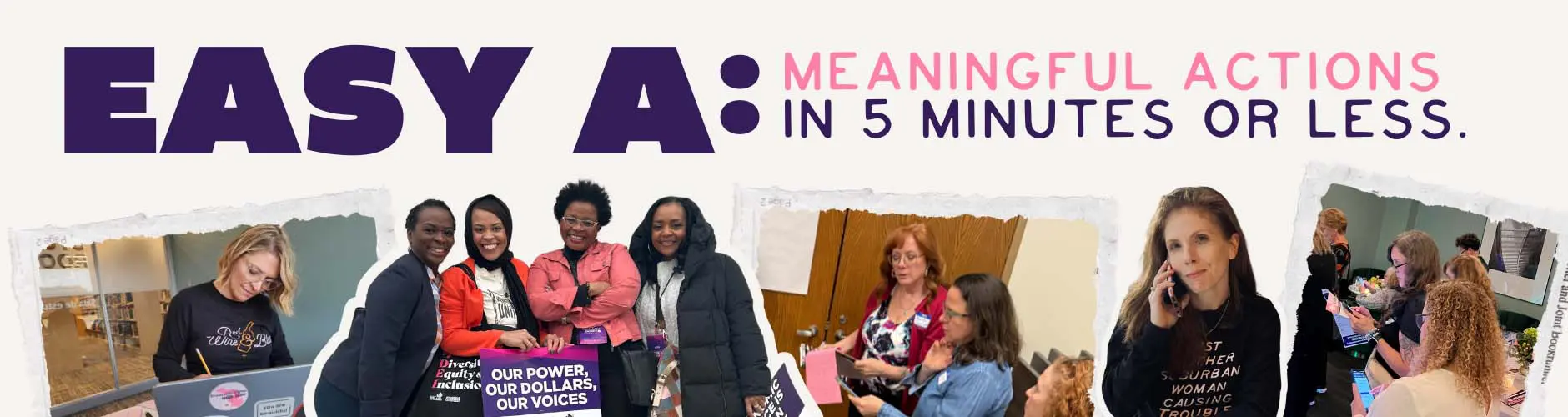
Hi there! Welcome to Easy A–Your go-to source for quick and easy actions you can take in five minutes or less about the issues you care about.
Are you a busy mom? Or maybe your work is so hectic you can’t think about anything else during the day? A lot of us are also taking care of parents or other loved ones too, leaving little time for anything else.
The good news is that these are things you can do while you’re waiting in the school pick up line, on your lunch break, or even at your kid’s soccer practice – anywhere you happen to be! And you can easily share Easy A with your friends so they can be in the know, too! We’ll send you a new action to take every week–just one, we promise –and it will always be something you can do in five minutes or less. Ready to get started? Let’s go!
Do This: Reclaim our Democracy this July 4th
This weekend, America celebrates our 250th Independence Day. To get ready for this milestone, we took the Easy A actions of reading the Declaration of Independence together and pausing to consider the complicated meaning of July 4th for different Americans throughout our nation’s history.
For many of us today, celebrating the holiday is still complicated. We love our country and believe in its founding ideals, but recognize that they haven’t always been afforded to all Americans. We know we still have a lot of work to do to create the America we believe in.
Last night, Red Wine & Blue’s patriotic bestie, historian and bestselling author Heather Cox Richardson, joined our founder, Katie Paris, to discuss how we can celebrate America’s 250th in a way that honors our full history.
They agreed that the most patriotic thing we can do right now is to reclaim our democracy from extremists in the 2026 midterm elections. We’re answering that call!
Earn your Easy A this week by telling us how you will join us for the midterms. There are so many ways to make a difference, and there is something everyone can do, no matter how much time you have. Fill out the form here to make your commitment.
America’s story belongs to all of us – let’s reclaim it!
Do This: Take Action Against School Board Extremism
So now you have learned how dangerous school board extremism can be for our schools, and you’re probably wondering, “Ok, but what can I do?” We’ve got the answer! The great thing is that you can attend school board meetings and even speak at the meetings to share your ideas and address your concerns. You can also bring other parents with you so they can speak up too. And don’t worry, if you aren’t able to go in person, you can also email them. 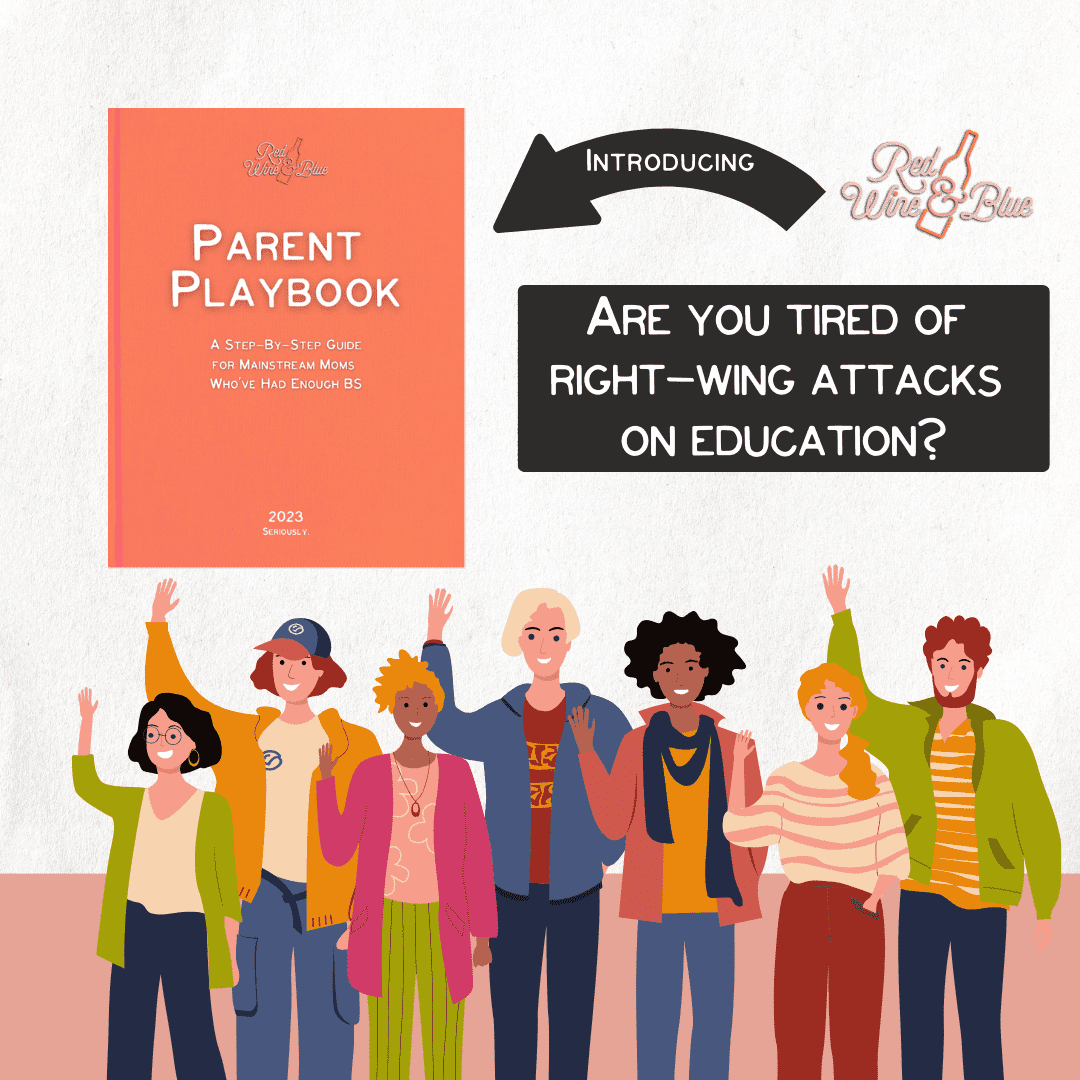
Remember, mainstream parents like us are the majority – It’s up to us to make sure our voices are heard. If you’ve had enough of a tiny number of super loud extremists turning your school board meetings into a three-ring circus and bullying your kid’s favorite teachers, we can help. We’ve got a super handy Parent Playbook that gives you everything you need to get started. Download your copy now! Once you read through it, I guarantee you’ll be thinking, “Oh yeah, I can totally do this!”
You don’t have to sit on the sidelines. You can be the one standing up for your community and protecting your kid’s education. Thanks for taking your Easy Action for this week! ??
Watch This: What’s Happening With Our School Boards?!
School boards are being used to dismantle public education. That sounds really sounds wild to say, right? How can the people elected to support public education be the ones who are attacking it? But it really is happening–And not just in a handful of places. It’s happening in school districts all across our country.
That’s why it is so important to learn about our local school boards and how we can support pro-public education school board candidates. Your Easy A action for this week: watch this short clip of school board member Carrie Douglass talking about what’s happening with our school boards.
Want to listen to the full episode on school board extremism? Check out our full podcast episode The Cost of Extremism – School Board Extremism or anywhere you get your favorite podcasts. Thanks for taking action this week!
Read This: What’s Happening With Our School Boards?!
Something strange is happening with our school boards. In the past few years, local school board elections went from being low-funded, grassroots campaigns to becoming battlegrounds for extremist takeovers. National conservative political groups are pouring excessive amounts of money into these races to get extremists elected to school boards all across America. And it’s happening in your district too.
In 2021, school board races started getting more attention as extremists began manipulating the frustration parents were feeling about COVID-era school closures (You might have even had conversations with parents in your community who were extremely upset over school closures and mask mandates). That frustration created an opening for outside groups. They latched on to that anger and used it to turn those parents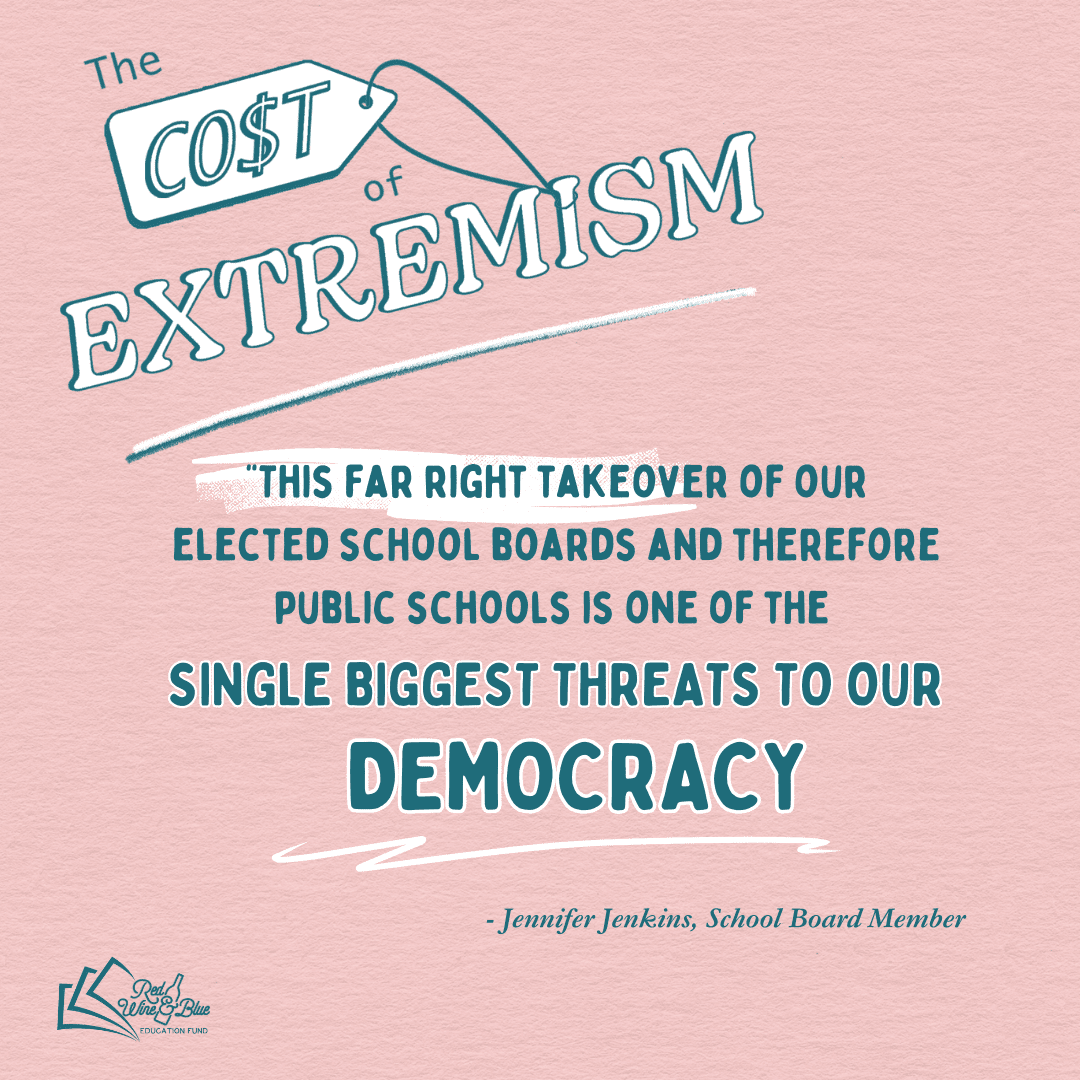 against public schools. And then suddenly, we had a loud, vocal minority of parents disrupting school board meetings, demanding that schools re-open and that mask mandates stop.
In the midst of this chaos, Moms for Liberty was founded, and those same parents who were angry about masks started speaking up at school board meetings about other things – wanting to ban books, attacking school curriculum, and gutting diversity and equity policies. And these attacks didn’t just happen at school board meetings. They started targeting school board members at their homes. Suddenly being a school board member, or even an advocate for public education, could result in personal attacks.
What’s even more disturbing is that these school board fights are meant to look like grassroots efforts, but in reality they’re actually part of a larger attempt by extremist groups to take over school boards and eventually dismantle public education. If that sounds pretty extreme, it’s because it is. And many extremist politicians are actually saying it out loud. And that’s really the bottom line here: public education benefits all of our kids, but extremists want to take it away.
These attacks are hurting our public schools, our teachers and most importantly our kids. Children shouldn’t be paying the price for extremism – but they are. And that’s why we–as parents, educators, and community members–need to know what’s going on.
We Interrupt Your Regularly Scheduled Programming: Make Your Plan to Vote!
The 2023 election is less than SIX weeks away! October is right around the corner and before you know it, we’ll be putting away the Halloween decorations and heading to the polls.
So we have a question for you: what’s your voting plan?
Step 1: Do you know when and where you can vote? In many states you must be registered before election day, and those deadlines are fast approaching in October. So if you haven’t done it yet, check your voter registration status.
Step 2: Nail down the details. Will you vote early in person, vote by mail, or wait for election day? What time of day will you head to the polls? Do you need to schedule around your work or kids? Some employers do allow you to take time off to vote. Use your state’s board of elections website to find polling locations and times. Once you decide, put it on your calendar and set a reminder! And be sure to make a note of what time the polls close in your district. If the polls close while you are still standing in line, don’t leave. Stay in line until you vote. It’s your right!
Step 3: Now that you have a plan, reach out to your friends, family, neighbors and coworkers. Make sure everyone you know is planning to vote by November 7th!
Do This: Tell Lawmakers to Ban Assault Weapons
By now you’ve heard from some survivors of mass shootings, and you’ve learned about the true cost of active shooter drills. And you’re probably wondering why we are spending billions of dollars for active shooter drills instead of addressing the actual problem of gun violence. Mainstream women (and men) are becoming increasingly frustrated at the lack of action by our elected officials. We know![quote: Students want change... They want to see [lawmakers] banning assault weapons.](https://redwine.blue/wp-content/smush-webp/2023/09/CostofExtremism_Tretta_Option1.png.webp) that active shooter drills are just a bandaid on the problem of gun violence, and not a solution.
that active shooter drills are just a bandaid on the problem of gun violence, and not a solution.
Ready to take action?
It’s past time to support gun sense legislation – join students and parents across America and tell Congress to support an assault weapons ban. Click here now to send a letter to your lawmakers. We’ve written it for you–all you have to do is click a few buttons! Thanks for taking action this week.
Watch This: School Shooting Survivor Talks About Gun Violence
Now that you know the true cost of active shooter drills, you’re probably wondering – why are 95% of school districts still participating in these drills? You’re not alone. Mainstream moms are fed up with a culture that values gun ownership over the lives of our children. Why are our children paying the cost of mass shootings while our legislators continue to ignore the problem?
That’s a question Ashbey Beasley wants answered. Ashbey was not involved in any gun violence prevention work, until she survived a mass shooting with her young son, at a Fourth of July parade. Now she speaks out about gun violence and the unexpected costs of active shooter drills. Ashbey is not willing to accept that we have normalized mass shootings with active shooter drills. And neither are we.
Watch this short clip to hear more of our interview with Ashbey Beasley:
To listen to the full podcast episode that explores the true cost and impact of active shooter drills, click here.
Read This: The Impact of Active Shooter Drills
Did you know 95% of school districts conduct active shooter drills? Some fast facts:
- There is NO research that backs up the value of active shooter drills.
- There’s significant evidence that these drills actually have a negative impact on the mental health of students, teachers, and school staff.
And here’s the kicker: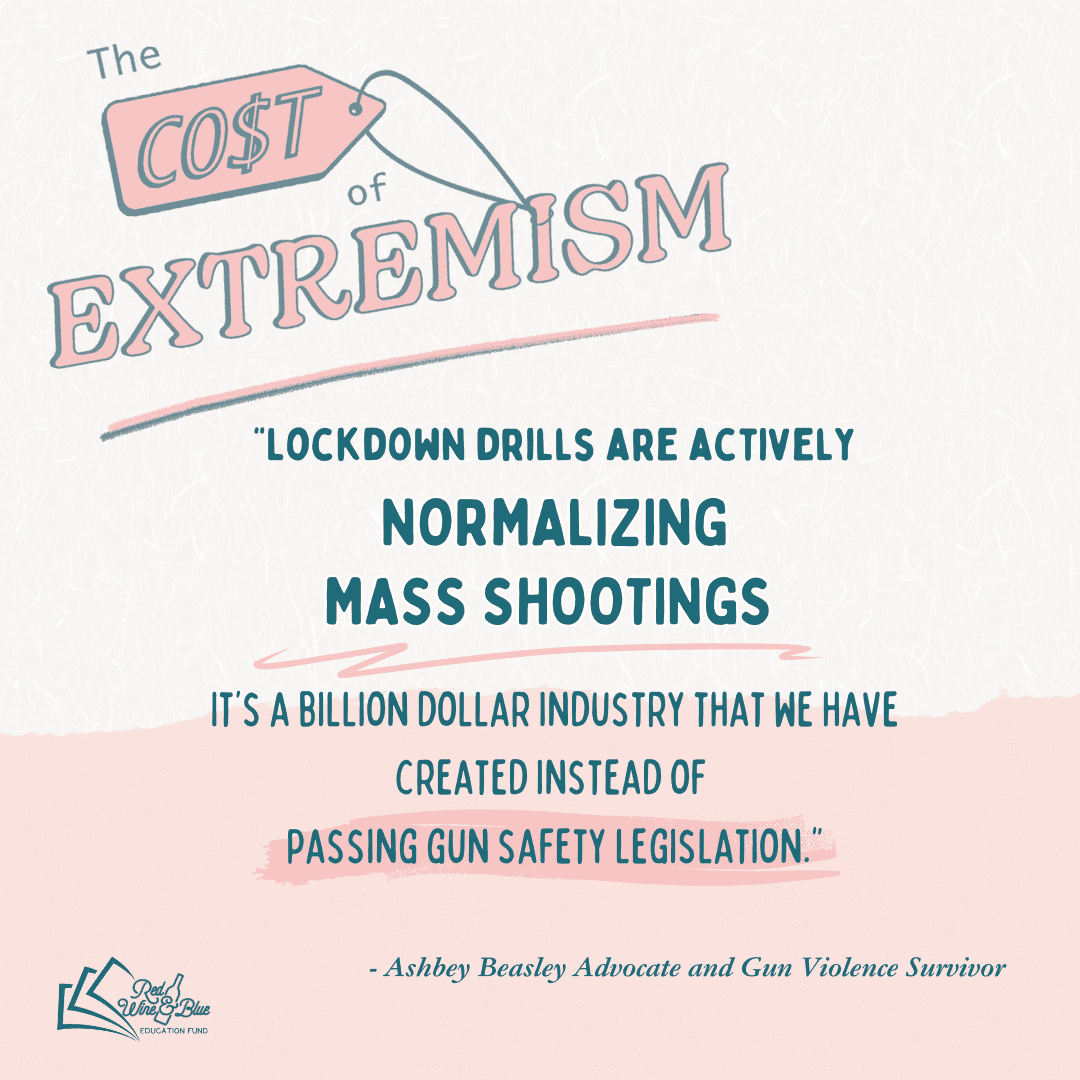
- The push for active shooter drills has created a $2.7 billion industry that feeds off the fear of school shootings. That’s right…companies are profiting off our kids’ fear. And these drills are just a bandaid on the problem that elected officials refuse to take action on.
Research conducted by Everytown for Gun Safety and Georgia Tech found that active shooter drills in schools are associated with a 39% increase in depression, a 42% increase in stress and anxiety, and a 23% increase in mental health problems. There was also a 22% increase in concerns over death in students, some as young as five years old. These fears of death also affect teachers and parents. So while active shooter drills are continuously being pushed instead of passing gun safety regulations, the long term impact on schools and the wider community is being ignored. And our children are paying the price.
Victims of gun violence often talk about a tipping point, when enough Americans will demand action on gun violence in this country. We know it is past time that our elected leaders take action on gun violence prevention. Children should not be the ones paying the price for this extremism.
Thanks for taking your easy action for this week. See you next Thursday!
We Interrupt Your Regularly Scheduled Programming: Are You Registered to Vote?
Feeling a little busy? We get it. Summer vacation plans are in the rearview mirror. It’s back to school season, and fall sports are picking up. And the holidays are right around the corner – but do you know what else is coming up? Election Day! And because it’s an “off-year election” voter turnout is usually pretty low. So that means your vote is even more important! That’s right…You have the power to influence the outcome of this election! This week’s Easy A action is simple, just check to make sure you are registered to vote and that all of your information is up to date. Head to www.vote.gov to check your voter registration. It’s that easy! Thanks for taking your Easy A for this week.
Take it One Step Further: Decoding Parents’ Rights
Sign this petition right now to tell mainstream media like ABC, NBC, and Fox News that extremist groups like Moms for Liberty do not speak for you. Remind them that regular American parents like you and me don’t support banning books, eliminating sex education, or whitewashing American history. We want our public school teachers to have the resources they need to make sure our kids are learning what they need to know to prepare them for the future.
Share This: Decoding ‘Parents’ Rights’
Now that you know the truth about the misleading “Parents’ Rights” movement, you can help us get the word out about it! We tend to underestimate the influence we have, but you, my friend, are an influencer! When it comes to your friends and family, you are a trusted source of information. The people you know are more likely to believe you over a complete stranger. Are you ready to use that power?
Click below to share this post online to spread the word about extremists trying to take away our freedom to parent our kids.